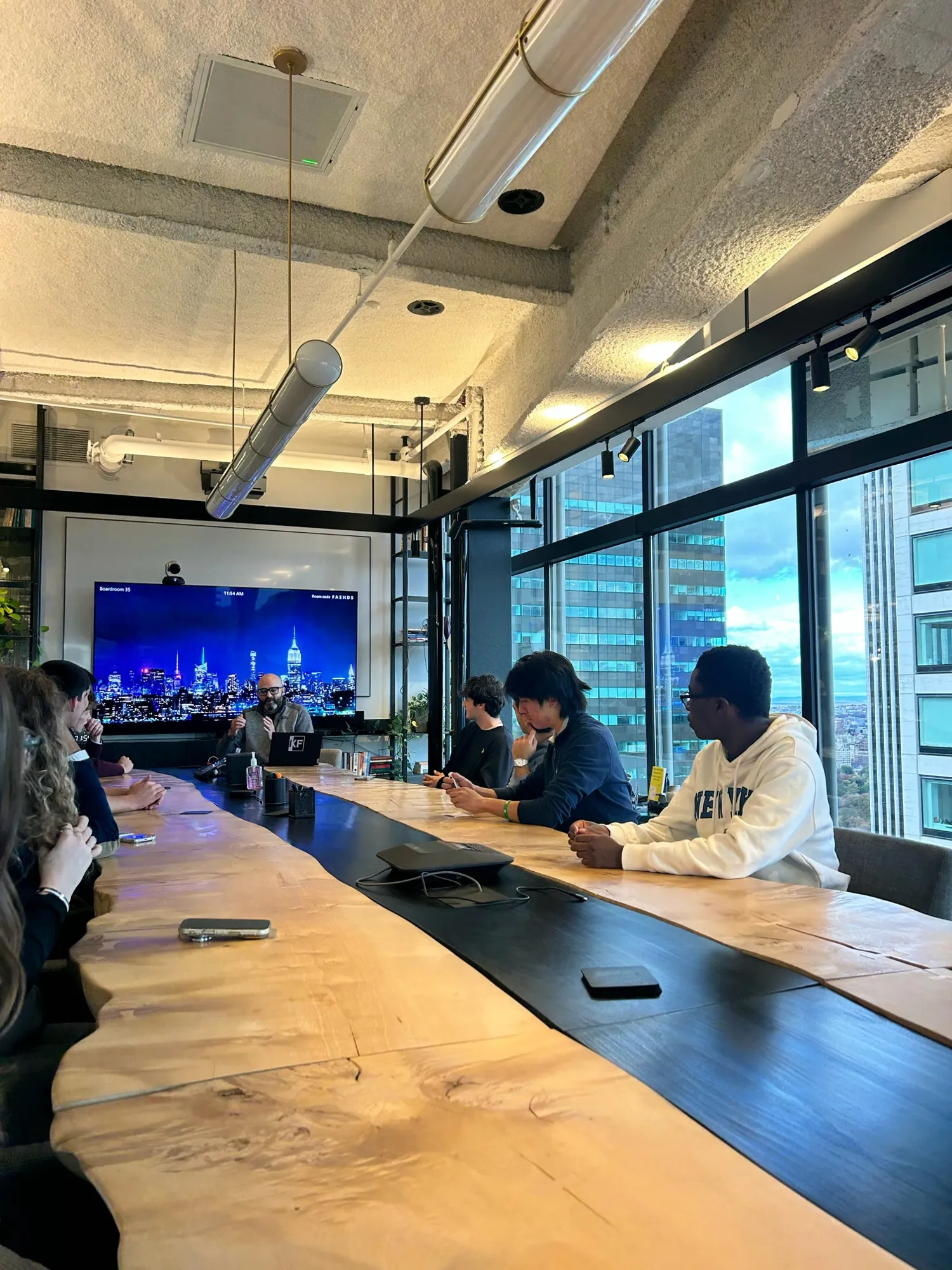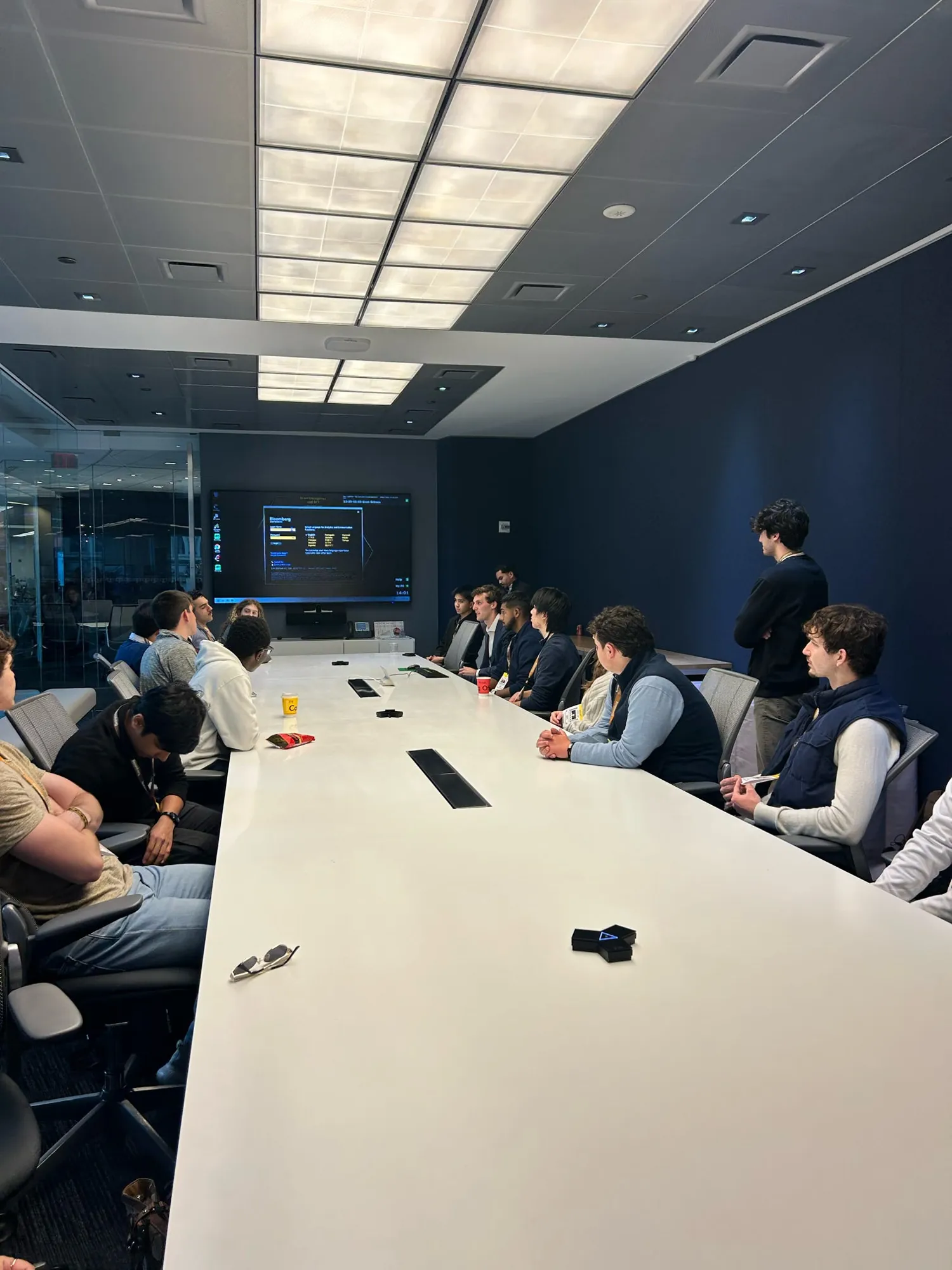
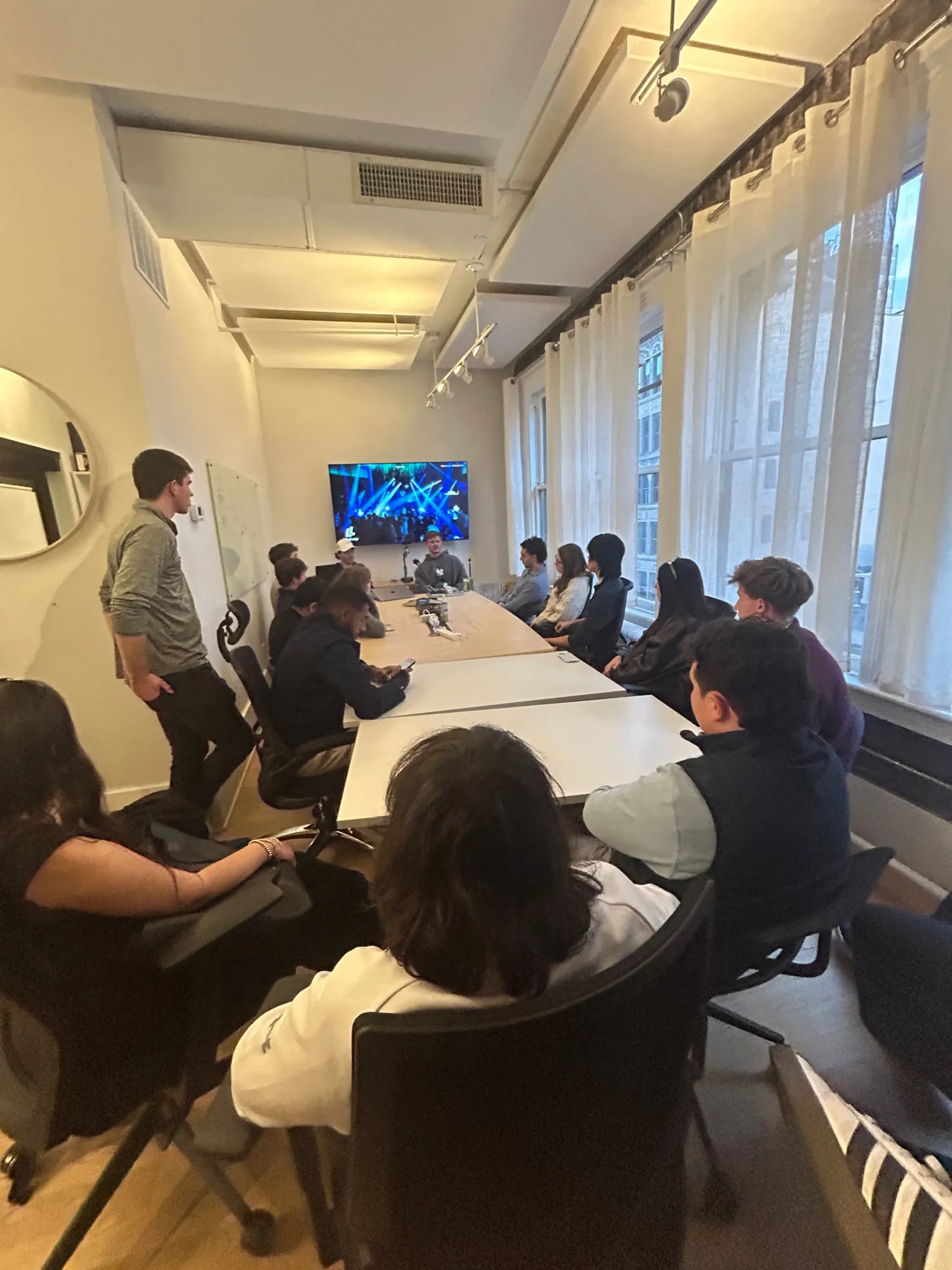
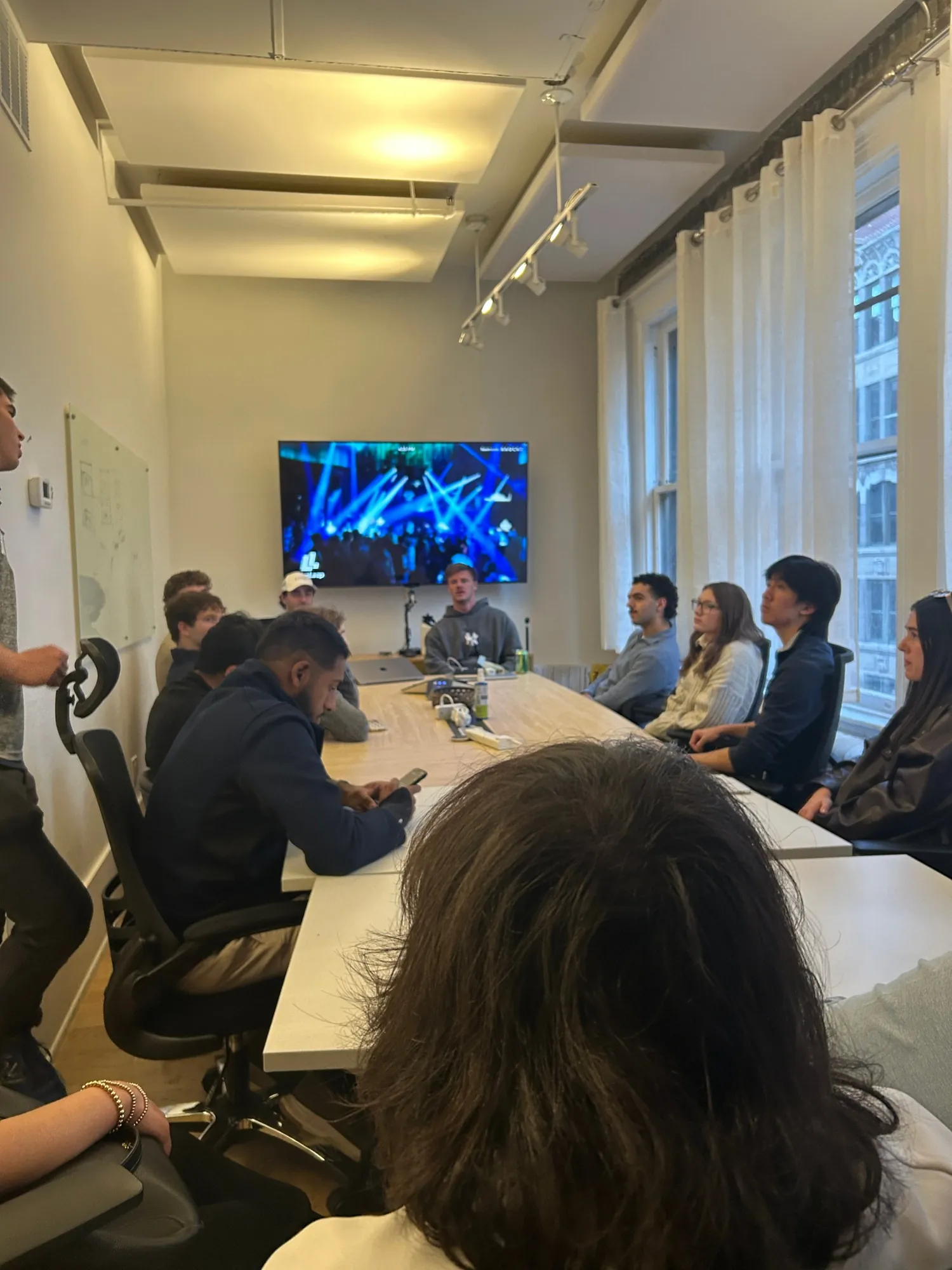
After three or four trips up a very small elevator, all of NES was finally packed into LineLeap’s conference room. Nick Becker told us to interrupt whenever we wanted. Then he told the story of a $2,000 Toyota Camry, a turnpike in Virginia and a bar most of us know by heart.
With Nick Becker, LineLeap co-founder, and Avi Paley, who builds LineLeap’s data and automation
LineLeap is the app that lets you skip the line at college bars. Today it has more than 2 million users and about 900 partner bars and nightclubs. For years, though, it was three non-technical college kids, a Squarespace site and a lot of rejection.
The biggest bar in Michigan ran on cash registers.
Nick went to Michigan. One co-founder went to Michigan and the other to Wisconsin. All three noticed the same thing: huge lines outside bars, and nobody who wanted to wait in them. When they asked bar owners whether they were doing anything about it, they found an industry stuck in another era. One of the biggest bars in Michigan didn’t even have a point-of-sale system. The owner opened the doors, people came in, and that was the marketing plan.
So they built a website on Squarespace over a weekend, for about $300 a year. Customers paid for a digital line skip and got an email receipt to show at the door. They launched at Whiskey Jacks in Wisconsin and sold $1,000 of line skips the first night. Later, a co-founder’s sister at Stanford was paid $1,000 to add a QR code that checked a simple database. That was the whole tech stack for a long time.
Four months, three bars, one crash.
They pooled their money for a $2,000, very beat-up Toyota Camry and spent their college summers driving campus to campus. The first summer was brutal. After about four months of selling, they had signed roughly three bars.
With one week left before school started, the owner of Champs Downtown in State College emailed them asking to meet. They were in South Florida. They pointed the Camry north for the trip that was supposed to save their summer, and somewhere on a turnpike in Virginia the car veered off the road and hit the center divider. Nick estimates the car was about 20% of the company’s assets at the time.
They rented a car, kept driving, and signed Champs. Nick said that deal may have saved the company. The room, full of people who have stood in that exact line, appreciated the story.
Rejected 99.9% of the time, for years.
For three summers they went to nearly every big college in the country, talked to thousands of venue owners and got turned down almost every time. Their targeting was simple: bars, not nightclubs, with lines long enough that people would pay to skip them. They found those bars by calling friends at other schools and asking them to pass along more friends.
How do you convince a bar when you have almost no track record? At first, by showing any momentum at all. Plenty of companies had tried this before, and almost none had gotten past two bars, so four or five was something. Later, by simply surviving. They went back to owners who had said no and pointed out that they were still around two years later, now with 30 bars and real money made for them, and asked what the downside of trying was.
Nick admitted that the first five or six years were brutal. Bars are a slow-moving industry. That made the early days painful, but it also makes the business hard to copy now.
Not a technical bone in their bodies.
None of the three founders was technical. For the first four years, the company was entirely salespeople. Nick sees that as a strength: the only question that mattered early on was whether people would pay to skip the line and whether it made bars money. You don’t need great software to prove that.
Eventually they had to hire engineers and build a real app, and because nobody on the founding team was technical, that was painful and full of mistakes. Asked what they would do differently, Avi said hire strong tech talent early, though AI might change that math now. Nick’s answer was about people: when you have a gut feeling that someone isn’t working out, act on it faster. Every time they followed their gut, they don’t think they were wrong.
Money stayed tight for a long time. In the first couple of years they raised maybe $25,000. Before Y Combinator, they raised a couple hundred thousand from friends and family, and only after they already had traction.
Prove people will pay before you build anything fancy.
Our takeaway from Nick Becker
The best ideas came from the bars.
For the first three or four years, the goal wasn’t a billion-dollar company. It was a business they could keep working on after graduation. By the time they graduated, LineLeap was making real money for its venues. They applied to Y Combinator, got in, and shared group partners with DoorDash and Brex. That is when the ambition changed.
Almost every new product came straight from conversations with bar owners: COVID passes, event tickets, bar crawls, partnerships with major alcohol brands, and now a points program that rewards students for things like Lyft rides and DoorDash sign-ups. The next big opportunity is giving bars something they have never had, a real way to know and reward their best customers. The goal is for LineLeap to become the everyday app on campus, not just the one you open on a Friday.
They moved to New York because many of the world’s biggest alcohol brands are headquartered there, and the city made it much easier to hire engineers.
The math works better in State College.
Someone asked why LineLeap still focuses on college towns instead of big cities. Avi walked through the math. Say it costs $20 to acquire a customer. A 28-year-old in New York might go to the same bar a couple of times a year. A college student might go twice in one week. The cost to acquire a customer is the same, but the repeat business is completely different.
Growth today still comes from grinding sales, now with a BDR team, student surveys and an algorithm that predicts which bars will be good partners. It also comes from social proof: the best college bar owners in the country know each other, so LineLeap brings existing owners in as advisors and asks them to vouch for the product to other venues. A few venues have gone completely cashless through the app. Festivals and international expansion? Some festivals, but large ones become a ticketing business, and they want the product fully built out in the US before going abroad.
He critiqued their website before they hired him.
Avi was a mechanical engineer at Apple, and before that on the Formula racing team at Purdue. When he reached out to LineLeap, he sent a short deck about the company along with a list of every issue he had found in their app. Worst case, he figured, they could just go fix them. He followed up several times.
His job description, once hired, was basically: go to LSU and make this product work. He ended up building LineLeap’s data pipelines, reporting and referral program from scratch. His point for students is that startups celebrate people who find a problem and fix it, while the corporate world often hands you a problem plus a process. If you do go corporate, he said, learn the incentives of the people above you, because they may not be about making the product better.
Get hired by doing the job first
From Nick and Avi’s answers. When a small startup posts a role, they can get a thousand applicants in the first day or two.
- Send value, not just an application.A critique of their product, a list of bugs, a mini project. Avi talks to anyone who does this, right away.
- Follow up, personally.Nick says he reads every LinkedIn message. A thoughtful, persistent note isn’t hard, and it makes you look like a doer.
- Build something for the role.Going for a sales development job? Build a tool that finds and ranks leads, and explain how you’d prioritize the sales team’s time.
- Bring what you love.Avi showed off a drink-ordering project he had built himself. Any sign of initiative counts.
- Say it with conviction.Between two similar candidates, Nick takes the one who says plainly that they want this and will work hard for it.
You have 42 weeks a year.
Nick’s co-founders were two years older and had worked together as campus reps at a food delivery startup. He met them because he was typing a pitch email to a restaurant executive in class, and the student next to him asked what he was working on and told him to call Patrick Skelly. His lesson: if you keep your eyes open, you can make your own luck.
His biggest piece of advice was to start something in college, as early as possible, and treat it as your number one priority. It isn’t reckless if you do it alongside school. Take your eight-week internship if you need it. That still leaves 42 weeks a year to build. He crammed for tests instead of reading every textbook, figures he kept about 90% of the grades he would have gotten otherwise, and doesn’t feel he sacrificed anything. If things had ended tomorrow, he said, they would have regretted nothing.
Work hard, work with people you like, drop your ego, and still back yourself.
Our takeaway from Avi Paley
A few more things we asked.
Answers are condensed and paraphrased from the conversation.
How did you avoid chasing shiny new ideas?
The product actually made money, and watching revenue grow made it obvious they should keep going. Whenever things looked grim, a new opportunity usually came out of the work itself. They also knew what they had was rare and didn’t want to blow it up.
How should a plan B fit around a startup?
Avi’s view is that building something gives you far more to talk about than most job candidates, so it is a hedge in itself. You can also intern at a startup. Nick doesn’t think working on a startup during school is a risk at all. Dropping out is the real risk.
What technical skills matter most now, with AI?
Avi barely reads code line by line anymore. What matters is architecture and system design: knowing which systems solve a problem, and being able to read an AI-generated plan and see why it won’t work. That only comes from building things and learning the hard way.
How do you use AI internally?
Carefully. Avi said you have to know what is a job for AI and what is a job for a plain script, and their data is their secret sauce.
What we took home.
LineLeap’s story isn’t a clever-app story. It is a persistence story: a $300 website, three bars after a summer of selling, a crashed car, and years of going back to owners who had already said no. The software came later. The sales came first.
Nick and Avi ended by inviting everyone to connect with them on LinkedIn, and said they’d love to hear what NES builds.
Three questions worth asking.
- What is the $300 version of your idea you could launch this weekend?
- Who already said no to you, and what would change their mind a year from now?
- Which startup could you send a thoughtful critique to this week?